8 Lessons from My Siemens Mobility Internship
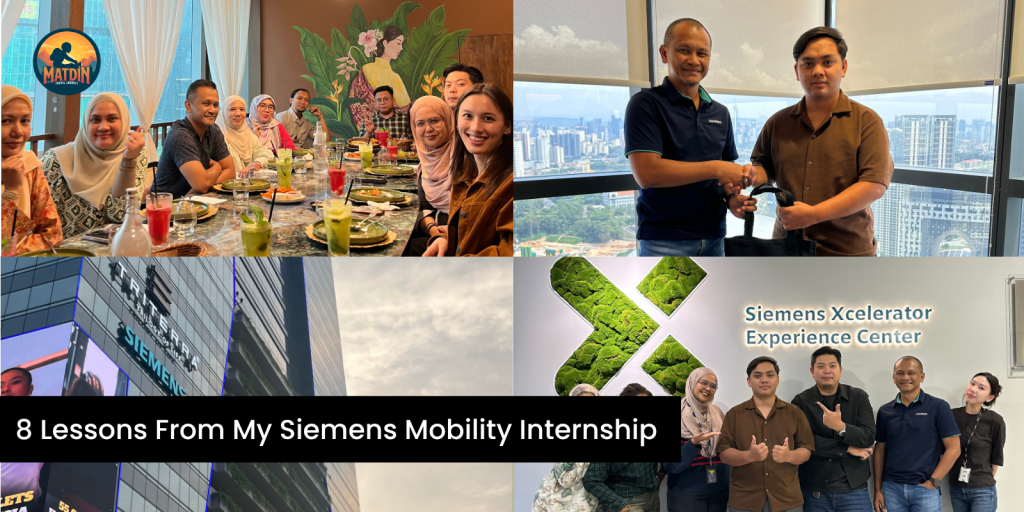
My Siemens Mobility internship was an eye-opening experience. Like most students, I entered thinking that success would depend mostly on technical knowledge and what I learned in university
But after spending a few months in as Financial Planning & Analysis Intern , I quickly realized something : the workplace operates very differently from the classroom.
Here are 8 Lessons from My Siemens Mobility Internship :
1. Communication Is More Important Than You Think.

In university, communication usually means presenting assignments or participating in discussions.
In the workplace, communication is much broader. It involves explaining ideas clearly, updating your manager on progress, and ensuring that everyone involved understands the task or objective.
For example, imagine your manager asks you to prepare a financial summary for a project. In university, you might just complete the task and submit it before the deadline.
Instead of working quietly and hoping it is correct, you can send a quick message like:
“Just to confirm, would you like the report to focus on the cost breakdown and monthly variance?”
This small step can prevent misunderstandings and help ensure that the work meets your manager’s expectations.
2. A Task list Can Make A Big Difference.
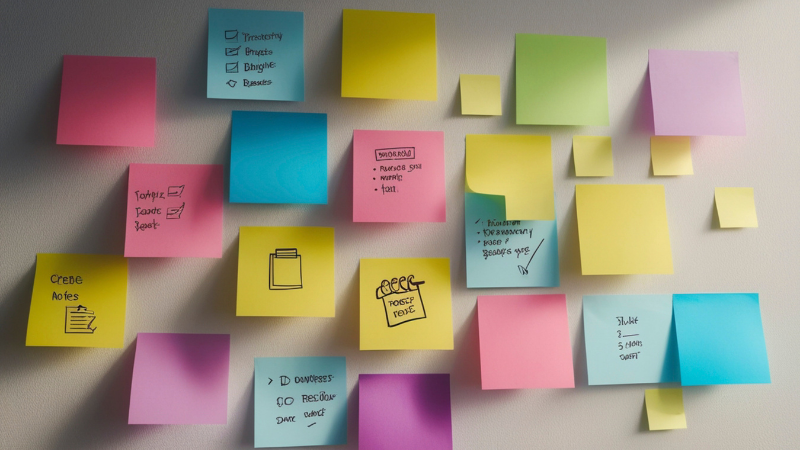
It’s easy to underestimate something as simple as a tasklist even I used to think it was unnecessary. I would just keep things in my head unfortunately i am not that smart.
But when my manager suggested tracking all tasks in a clear tasklist, I quickly realized how much smoother everything became.
Having a tasklist helps you see what’s done, what’s pending, and what needs attention next.
It makes coordinating with team members easier and prevents small tasks from slipping through the cracks.
A simple tool like this can truly boost efficiency and impact, even if it seems small at first
3. Acknowledge Your Mistake & Fix It.

Mistakes are normal, especially for interns. As someone who made a lot of mistake, my advice key is to acknowledge them early, learn from them, and take steps to fix them, such as creating notes or a personal guideline. Handling errors this way demonstrates responsibility and helps you grow faster.
For example, an error in an official letter I made affected the document team. My manager suggested correcting it and creating a simple guideline, which made the process clearer and less likely to be repeated in the future
This approach shows accountability, reinforces the correct process, and keeps your manager in the loop which is essential in a professional environment.
4. Be Proactive & Attentive.

Waiting to be told what to do often slows down progress. Being proactive means anticipating tasks and taking initiative. Being attentive means noticing small details and staying alert to what’s happening around you.
For example, during a project meeting, being attentive means tracking every action item, noting deadlines, and noticing even small updates from team members.
If a colleague mentions a minor issue with a report, you can flag it early or prepare a solution, instead of waiting to be asked.
These small observations can prevent bigger problems later and show your manager that you are reliable and detail-oriented
5. Ask The Right Questions.

In the workplace, your task is never isolated. Everything happens within a bigger environment, As an intern, it’s normal not to know everything. But what makes a difference is the type of questions you ask.
Instead of asking general questions like:
“Can you explain this?”
Try asking more specific and thoughtful questions like:
“Should I focus more on the variance analysis or the overall trend for this report?”
Asking the right questions:
- shows that you are thinking
- helps you get clearer direction
- saves time for both you and your manager
Good questions lead to better answers, and better answers lead to better work.produce work that is more relevant and valuable, instead of just completing tasks blindly
6.Understand The Surroundings.

In a corporate environment like Siemens Mobility, communication goes beyond technical skills, as different individuals and teams have different ways of expressing and interpreting information.
Some rely on formal, structured communication, while others depend on tone, timing, body language, and other non-verbal cues. Understanding these differences is key to interpreting messages correctly.
Each person or team also has different expectations—some prefer direct and concise discussions, while others value more detailed and reflective communication depending on the context.
To work effectively, you need to:
- observe how people communicate
- understand both verbal and non-verbal cues
- adapt your communication style accordingly
For example, some meetings require straight-to-the-point updates, while others need more detailed explanations. By adapting to these differences, communication becomes clearer, smoother, and more effective..
7.Understand The Stakeholders & Their Stakes.

In a corporate environment like Siemens Mobility, every task involves multiple stakeholders, each with different priorities.
Some may focus on cost, others on timelines, and some on overall performance.
Understanding who you are working with and what matters to them helps you:
- communicate more clearly
- prepare more relevant outputs
- reduce back-and-forth revisions
For example, a manager may prefer a high-level summary, while an operations team may need detailed breakdowns.
When you understand stakeholders, you don’t just complete tasks you deliver value.
8. Your Co-workers Are The Best Teachers.
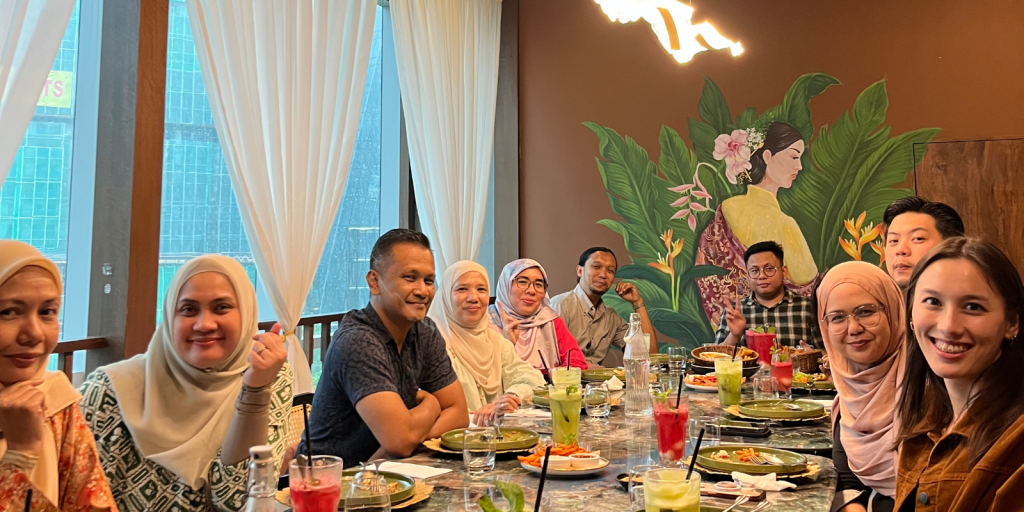
During an internship, Your managers, co-workers, teammates from other departments, and even fellow interns can teach you valuable lessons every day.
Observing how they approach tasks, handle challenges, and communicate effectively gives you practical insights that textbooks rarely cover.
I’m grateful for the opportunity to work alongside my manager, Azza Izzati Moideen, who has provided honest career and life advice a privilege hard to find elsewhere.
She guided me technically, teaching me how project finance works and how to use Excel effectively, and practically, showing me how to manage time, prioritize tasks, and coordinate with internal stakeholders.
Thanks to Hafiz Hassan & Nabil Fikri for breaking down project finance in simpler terms, and Gyenice Siow for showing me how to work efficiently as a Gen-Z. Young & Energetic.
I also appreciate Antone Jacky and Aznita Azmi for their guidance on daily challenges and practical tips for managing tasks. Each of you has played an important role in my growth.
Conclusion – Siemens Mobility Internship
Lastly, I would like to thank Siemens Mobility CFO, Sudirman Swong for accepting me as an intern, showing exceptional leadership, and always staying humble and approachable, may Allah bless you always. I will remember your advice “Live moderately”.
Overall, this internship has been an invaluable experience. From learning to communicate effectively, manage tasks, and be proactive, to gaining insights from every team member, I’ve grown both professionally and personally.
I’m grateful for the guidance, lessons, and opportunities that have shaped my journey, and I’m excited to carry these learnings forward in my career. Read more of my article here